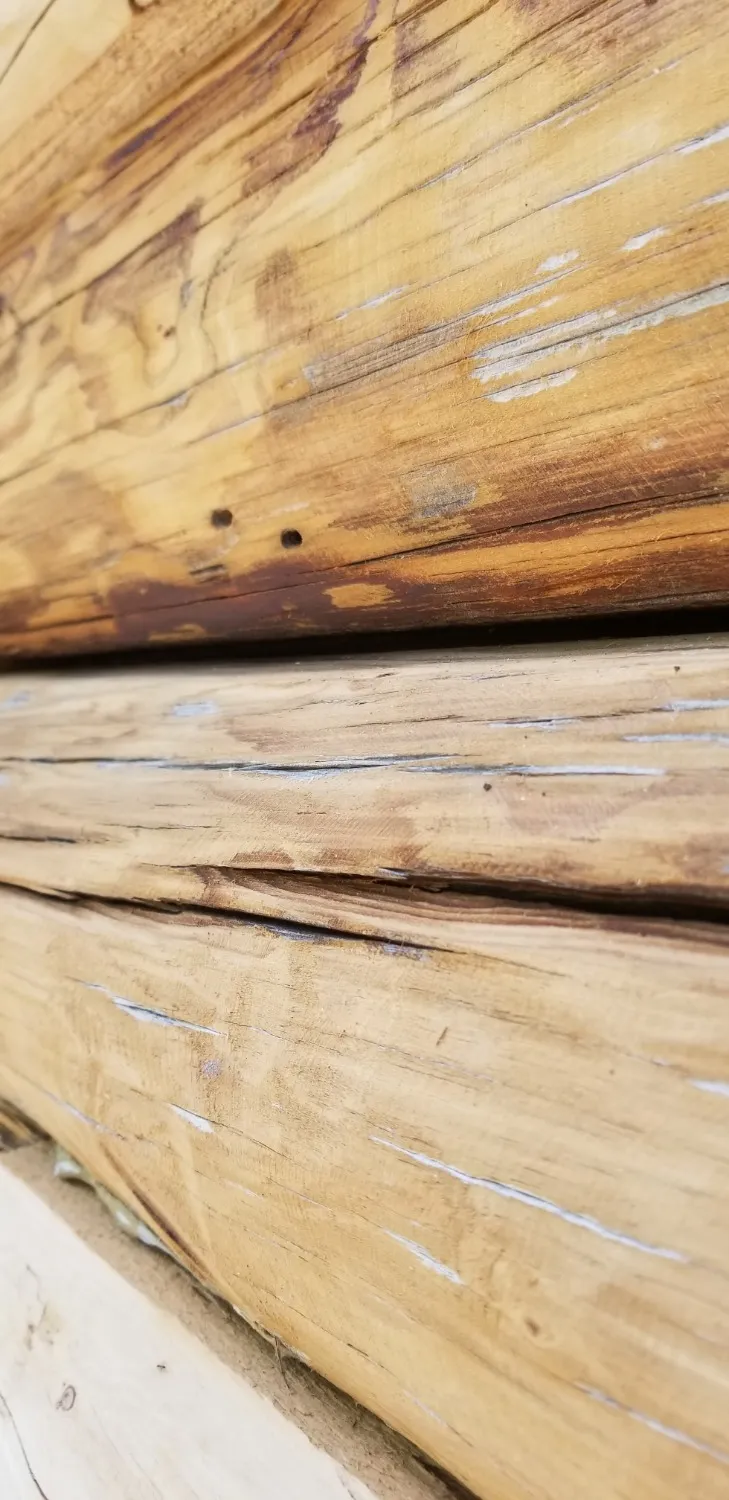
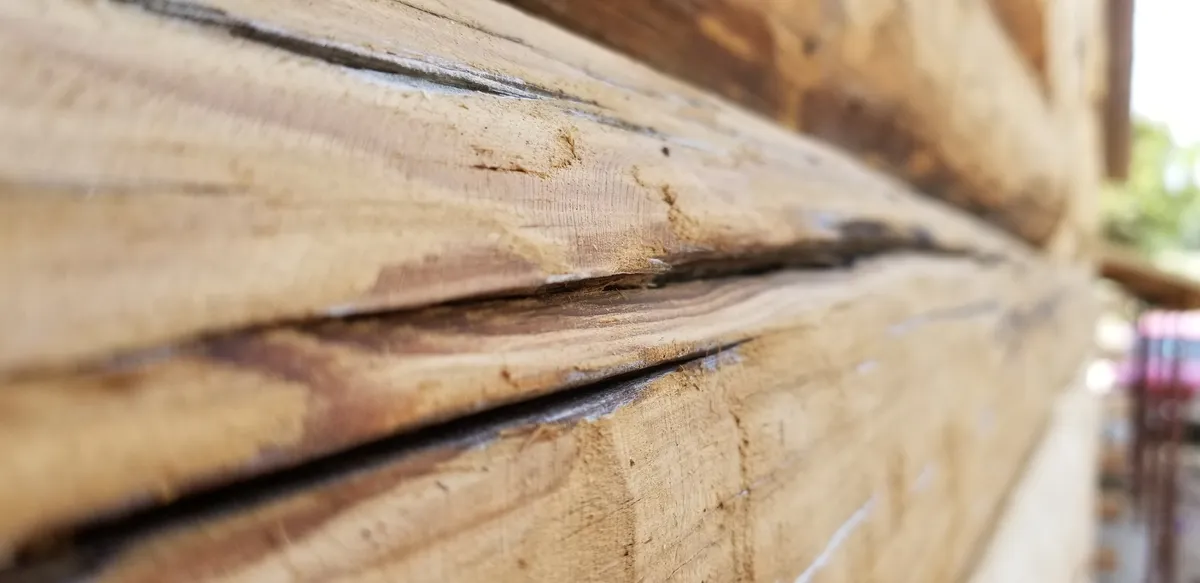
One of the questions I get from log cabin owners all the time is "Which log checks do I fill and which ones are ok to leave open?" Well, the answer is not as straightforward as you might initially think. Most sealant manufacturers will sell a log caulk or log chink for sealing checks and gaps. They will also usually sell a backer rod or foam made of different shapes and sizes that helps in filling the gaps or log checks before sealing. The backer foam helps fill the gap with a more cost-effective product and it allows for better expansion and performance from caulk or chink.
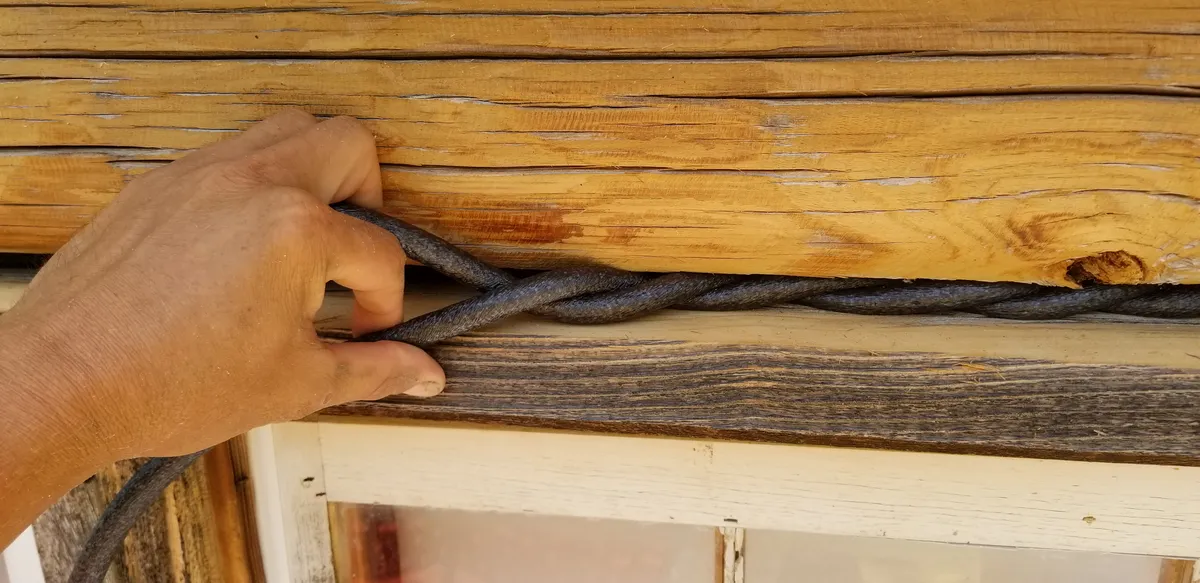
Even though it is sold in all kinds of different sizes, I only like to buy one size: 1/2 inch. I then braid it as I install, as thick as I need it. You can also cut it smaller with a razor knife when needed. This allows you to simplify and only use one size while up on the scaffolding and ladders. Any openings that are too large to braid, I fill with OSI closed cell spray foam.
The problem with sealing everything
Now, the basic rule of thumb in the industry is to caulk everything that faces upward and collects water. There are a few issues that arise when going that route without precautions. In my humble opinion, caulk or chink is always a back-up element barrier. No matter the quality, caulks are not primary water barriers. Log caulks and chinks will always leak and fail if given enough time exposed to the elements.
One of the worst situations you can get yourself into when sealing with log caulks and chinks is over-sealing a check mark and taking no other steps to prevent element penetration or encourage drainage. Once a fully filled upward-facing check starts to leak, there is no way for it to dry out, so it stays wet for way longer than if you had not caulked it in the first place. I have done this firsthand and watched it accelerate the rotting process, causing the logs to fail.
One thing you can do to help prevent this is to leave any part of the check that faces down unfilled. In the event that the sealant has a small failure, this will leave the water a weep hole to escape. A majority of the time, the small failure only allows moisture to come in when the weather is at its worst. All vertical caulked checks and cracks should always have a weep hole left at the base.
"Turning your checks out"
What about the log check marks that are not really up or down? Another step you can take to help keep water out is what I like to call "turning your checks out." This involves grinding or sanding the lower lip of the check mark to an approximate 45-degree angle. This causes the drip line from the upper lip to now extrude past the lower lip. That gives you an extra line of protection from water getting into those log checks. Once they are filled with caulk it doesn't really affect the look.